
Dodge City Highlights Housing Leadership Before Kansas Legislatur
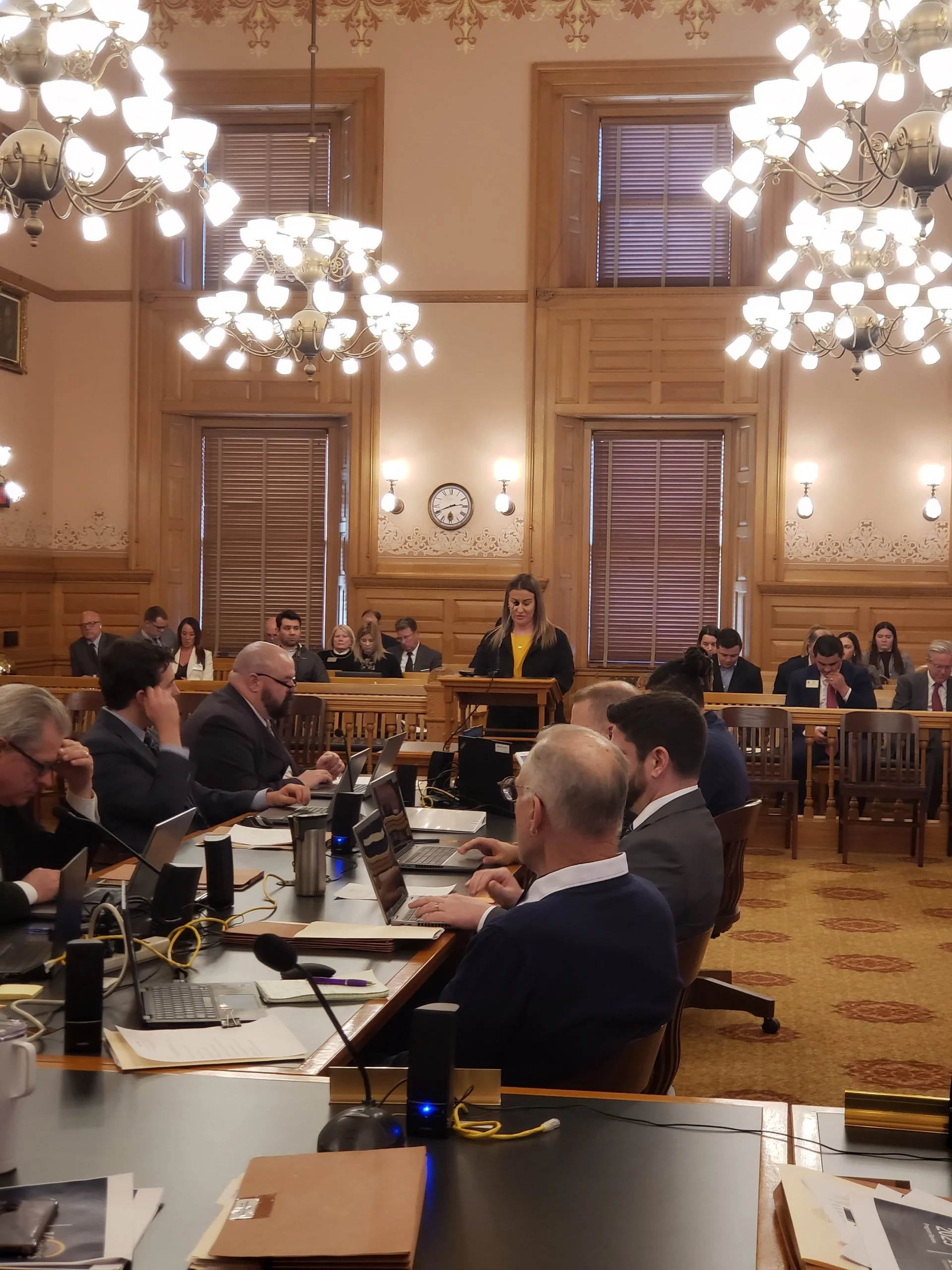
Dodge City’s leadership in workforce housing and economic development was on full display recently as local and state housing leaders presented to the Kansas Legislature’s Joint Commerce Committee on how housing incentives are driving growth across the state.
The presentation, “Expanding Housing Opportunity in Kansas: MIH + KHITC + Community Impact,” brought together state program administrators, community leaders, private developers, and housing economists to demonstrate how layered housing incentives are helping Kansas communities meet workforce needs and remain competitive.
Statewide Housing Tools, Local Impact
The session opened with an overview of three key housing tools: the Moderate-Income Housing (MIH) Program, the Kansas Housing Investor Tax Credit (KHITC), and Reinvestment Housing Incentive Districts (RHIDs). Together, these programs help close financing gaps that often prevent housing projects from moving forward, particularly in rural and mid-sized communities.
Alex Oral highlighted the strong return on investment generated by these tools, noting that every dollar of state funding leverages approximately six dollars in total housing development. Since inception, more than $220 million in applications have been submitted statewide, with $69 million awarded to projects that otherwise would not have been financially feasible.
Dodge City: A Model for Strategic Housing Development
Dodge City was featured as a leading example of how communities can effectively use housing incentives to support economic growth. Assistant Director of Economic Development Mollea Lightner shared how Dodge City has taken a proactive, data-driven approach to housing for more than a decade.
Housing assessments conducted regularly since 2009 have helped guide local strategy, with the most recent study identifying the need for 1,465 additional housing units by 2035. In response, Dodge City established the Community Housing Association of Dodge City (CHAD) to focus on workforce housing, infill development, blight removal, and training future construction professionals.
Through partnerships with local employers, developers, and the City, Dodge City has successfully layered MIH, KHITC, and RHIDs to deliver a mix of single-family, multifamily, and workforce housing options. These projects have improved housing availability, stabilized prices, and supported workforce retention, key factors in attracting and retaining major employers.
One highlighted example was United Village, a large-scale workforce housing development driven by the expansion of Hilmar Cheese Company. The ability to demonstrate housing readiness played a critical role in securing one of the largest private investments in southwest Kansas.
Developer and Market Perspectives
The presentation also included a developer perspective from Derek Lee, Building Kansas LLC, which shared how MIH, KHITC, and RHIDs reduce risk and allow projects to “pencil” in communities where construction and infrastructure costs have outpaced attainable home prices. These incentives enable local developers to build housing for teachers, healthcare workers, young families, and early-career professionals, groups essential to community vitality.
Closing remarks from Randy Speaker focused on broader housing market pressures, including rising construction costs, infrastructure challenges, and demographic shifts that are pushing the average age of first-time homebuyers higher. Speaker emphasized that without strategic incentives and strong public-private partnerships, many Kansas communities, especially rural ones, would struggle to compete for people, employers, and investment.
Housing as Economic Infrastructure
The overarching message to legislators was clear: housing is economic infrastructure. Programs like MIH, KHITC, and RHIDs are not simply housing tools, they are workforce, business retention, and community development strategies that help Kansas communities deliver the American dream of homeownership.
Dodge City’s experience demonstrates what is possible when planning, partnerships, and state support align—and why continued investment in these programs is critical for the future of Kansas communities.